What the Data Shows
BOAS Grade 0 to Grade 3: What the Cambridge Assessment Measures
The Kennel Club and University of Cambridge scheme that assigns a breathing score to flat-faced dogs has produced grade distributions that are difficult to read as anything other than a finding.
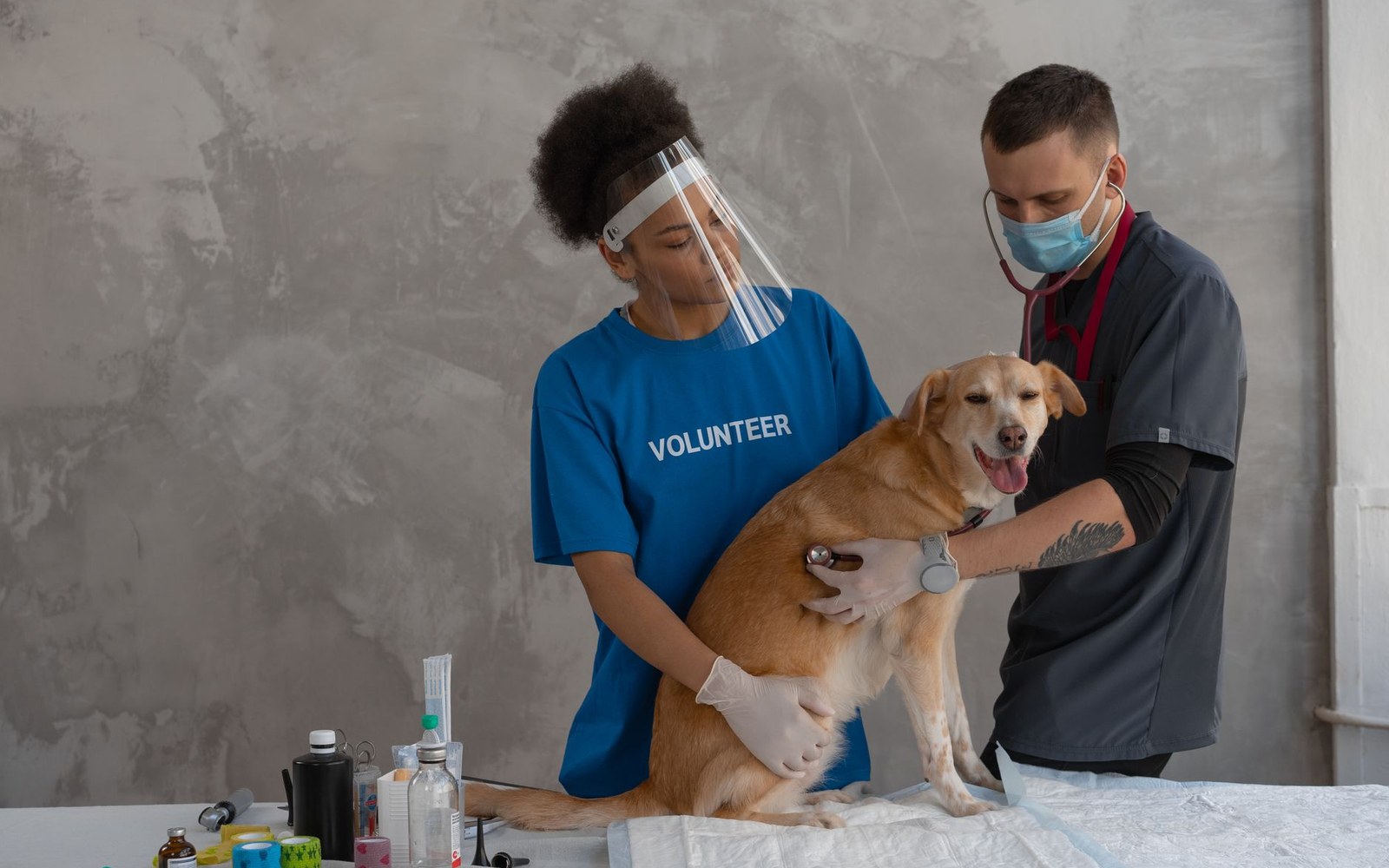
The Respiratory Function Grading Scheme run jointly by the Kennel Club and the University of Cambridge — the exercise protocol, the four-grade scale, and the published grade distributions for bulldogs, French bulldogs and pugs as of the most recently reported cohort.
Photo: Mikhail Nilov / PexelsAn Exercise, a Microphone and a Four-Point Scale
The Respiratory Function Grading (RFG) scheme was developed at the University of Cambridge's Queen's Veterinary School Hospital, led principally by Jane Ladlow, and runs in partnership with the Kennel Club. Its purpose is to quantify the degree of airway obstruction in brachycephalic — flat-faced — breeds under conditions that expose the deficit: not rest, but exercise.
The test protocol is standardised. A dog walks and trots for three minutes at a set pace, then is assessed immediately afterwards. A veterinary examiner trained and listed by the scheme listens to respiratory sounds with a stethoscope at the trachea, larynx and nares, and observes effort, recovery time and any signs of distress. The grading draws on both auscultation and the examiner's clinical assessment of functional compromise. Importantly, the test does not sedate or scope the dog; it measures the breathing the dog produces when its airway is taxed, not the anatomy at rest. That distinction matters because dogs with mild structural compromise may appear unremarkable in a consulting room and deteriorate only under load.
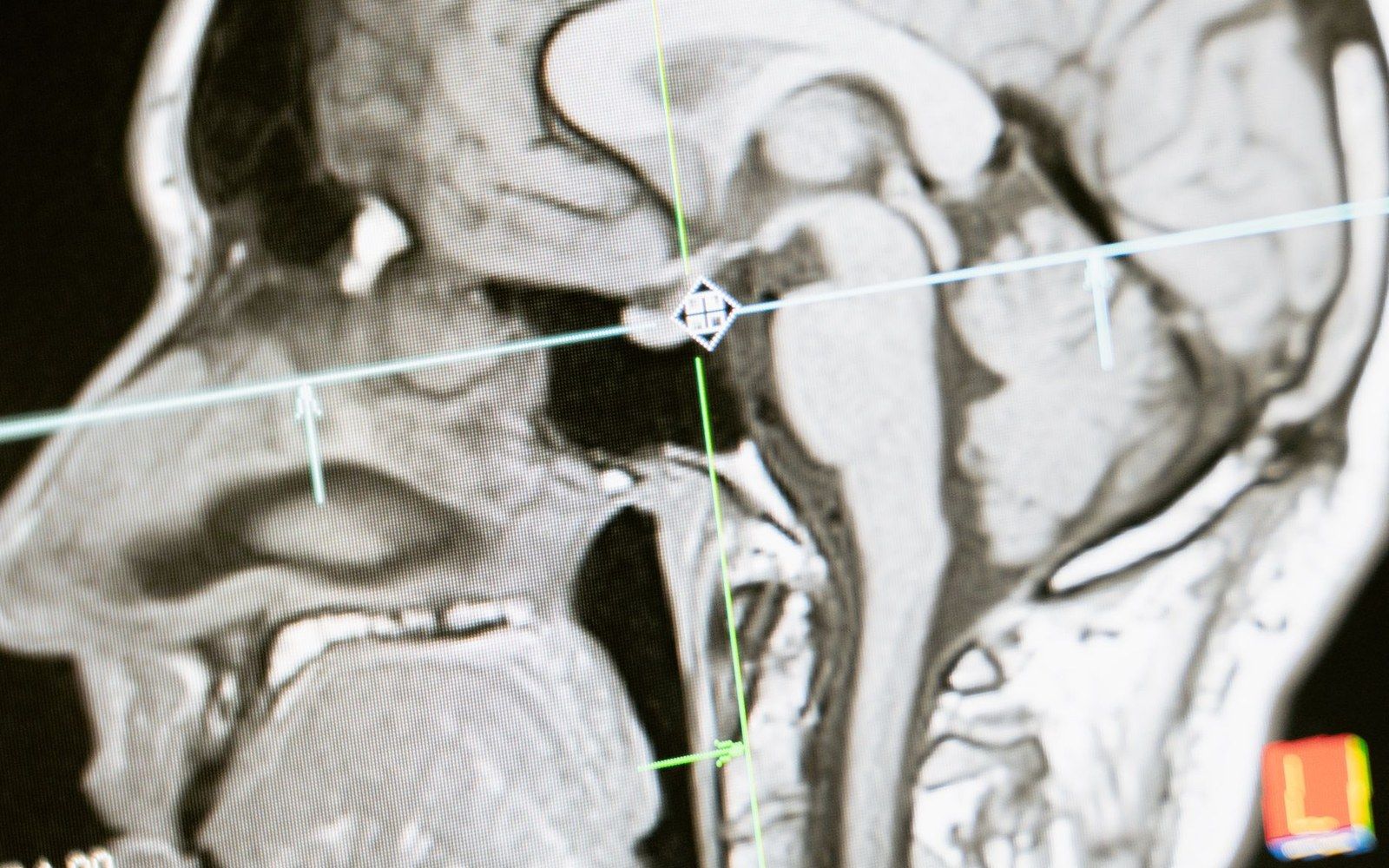
Screening images are read against a defined grade scale, and the grade travels with that dog’s own record rather than with its breed.
Photo: MART PRODUCTION / Pexels
A grade is recorded against the individual dog, never against the breed.
Photo: Tima Miroshnichenko / PexelsThe four grades run from 0 to 3. Grade 0 indicates no clinically relevant obstruction — the dog breathes freely before and after exercise. Grade 1 indicates mild signs, audible abnormal respiratory noise or mildly prolonged recovery, but without functional impairment that would bar breeding under the scheme's recommendations. Grade 2 indicates moderate BOAS — Brachycephalic Obstructive Airway Syndrome — with clear signs of respiratory compromise, and the Kennel Club's published guidance advises that Grade 2 dogs should not be bred from. Grade 3 is severe BOAS, representing significant respiratory distress and functional impairment; these dogs are additionally identified as appropriate candidates for corrective surgery.
The scheme targets three breeds above all others: the English bulldog, the French bulldog and the pug. All three are among the breeds the Kennel Club classifies under its Category 3 of its Breed Watch programme — the highest-concern tier, where judges are instructed to withhold awards from any exhibit showing respiratory distress at a show.
What the Grade Distributions Say
Published data from the Cambridge scheme, reported in peer-reviewed literature and presented in the context of ongoing research by Ladlow and colleagues at Cambridge, show grade distributions that differ markedly between individuals but trend heavily toward clinically significant grades across all three breeds. In a cohort study published in the journal PLOS ONE in 2015, Ladlow and collaborators found that more than half of the French bulldogs, bulldogs and pugs assessed were classified as affected by BOAS — that is, Grade 2 or above — and a substantial proportion of those fell into Grade 3.
The four grades — what each means
Subsequent cohort work has refined those distributions. Data accumulated through the scheme and cited in a 2019 paper in Scientific Reports, also from the Cambridge group, showed that among dogs presented for grading — a population that, it should be noted, is self-selected and does not constitute a random sample of each breed — Grade 0 dogs were a minority in bulldogs and pugs in particular. The English bulldog returned the highest proportion of Grade 2 and Grade 3 results in repeated cohort analyses. Pugs followed closely. French bulldogs showed a broader spread but with Grade 1 and Grade 2 predominating.
The self-selection caveat is material: dogs brought forward for grading are often those whose owners intend to breed from them, meaning breeders already attentive to health testing are over-represented. If the tested cohort is healthier on average than the general breed population — which is the reasonable assumption — the grade distributions from the scheme may understate the prevalence of severe BOAS across each breed as a whole. The Royal Veterinary College's VetCompass programme, drawing on clinical records from a far broader and less selected population, has separately documented high rates of respiratory disorder in all three breeds, with the VetCompass data on French bulldogs showing respiratory problems among the most common reasons for veterinary attendance.
The Grade as a Regulatory Instrument
The Kennel Club incorporated the RFG scheme into its health requirements for the three target breeds, stating that dogs graded 2 or 3 should not be used for breeding. This recommendation operates within the Kennel Club's broader framework for high-concern breeds but does not carry the force of law in England or elsewhere in the United Kingdom; compliance depends on breeders submitting their dogs for assessment and acting on the result.

The standard runs to a few hundred words, and every clause in it is amendable by committee.
Photo: RDNE Stock project / PexelsThe grade's legal relevance is sharpest outside the UK. In Norway, the 2023 Borgarting Court of Appeal ruling that found English bulldog and Cavalier King Charles spaniel breeding to violate the Norwegian Animal Welfare Act drew on evidence that a majority of tested bulldogs showed clinically significant respiratory compromise — findings consistent with the Cambridge grade distributions, even if the Norwegian case drew on its own veterinary evidence. Similarly, the Dutch regulatory instrument that established a minimum muzzle-length ratio for brachycephalic breeds, introduced in 2019, was framed around the same body of physiological evidence that the Cambridge scheme quantifies. The grade is, in effect, one of the principal empirical instruments through which the broader welfare argument about flat-faced breeds is measured and communicated.
Rowena Packer at the Royal Veterinary College has published extensively on the welfare burden of brachycephaly, situating grade distributions within the wider epidemiological record of BOAS-related morbidity. Her work, alongside that of Ladlow's Cambridge group, forms the primary empirical basis on which breed-standard revision arguments and regulatory proposals across Europe have rested since approximately 2015.
For the scheme to function as a selective pressure on population health, tested dogs graded 2 or 3 must not be bred from, and Grade 0 and 1 dogs must be preferentially bred together over generations. Whether the currently graded cohort is large enough, and the compliance rate high enough, to shift breed-level grade distributions measurably over a five- or ten-year horizon remains the central open question. The Cambridge group has indicated that longitudinal analysis of grade trends over successive generations is a research priority, but published multi-generational outcome data are not yet available at scale for any of the three primary breeds.
Breeds in scope
| Breeds in scope | What the record states |
|---|---|
| English bulldog | highest proportion of Grade 2 and 3 results in Cambridge cohort analyses |
| French bulldog | Grade 1 and 2 predominant in published cohort data; Grade 0 dogs a minority |
| Pug | grade distribution closely comparable to the English bulldog in repeated assessments |