The Court Has Ruled
The 2018 Regulations That Rewrote the Licence
England's licensing overhaul set a litter threshold, created a star-rating audit and replaced a framework that had barely changed since the 1970s.

The Animal Welfare (Licensing of Activities Involving Animals) Regulations 2018 — what they replaced, the star-rating system they introduced for dog breeders, and how the licence threshold of five litters per year is calculated and audited.
Photo: Kampus Production / PexelsA threshold, a rating and a paper trail
The Animal Welfare (Licensing of Activities Involving Animals) Regulations 2018, which came into force in England on 1 October 2018, replaced the Breeding of Dogs Act 1973 and its 1999 amendment as the primary licensing instrument for commercial dog breeders. Where the earlier legislation had set the trigger for a licence at five or more breeding bitches, the 2018 Regulations shifted the threshold to three or more litters whelped in any twelve-month period — a change intended to capture breeders who kept fewer bitches but cycled them repeatedly.
Local authorities in England are the licensing body under the Regulations. Any person who breeds three or four litters a year may still require a licence if they are doing so in the course of a business, a test applied through a set of secondary indicators — whether dogs are advertised for sale, whether income is generated and whether the activity is conducted with commercial regularity. The Animal Welfare (Licensing of Activities Involving Animals) (England) Regulations 2018 are published in full on legislation.gov.uk and include the schedules specifying minimum welfare standards that all licensed premises must meet.

The standard runs to a few hundred words, and every clause in it is amendable by committee.
Photo: RDNE Stock project / PexelsKey thresholds and ratings
| Key thresholds and ratings | What the record states |
|---|---|
| Five or more litters in twelve months | mandatory licence trigger, regardless of bitch numbers |
| Three to four litters per year | licence may still apply if the activity meets the "in the course of a business" test |
| One to five stars | the rating scale assigned after inspection; determines licence duration |
| One-year licence | awarded at one or two stars; triggers a return inspection within twelve months |
| Three-year licence | available at three stars and above; still subject to at least one unannounced inspection |
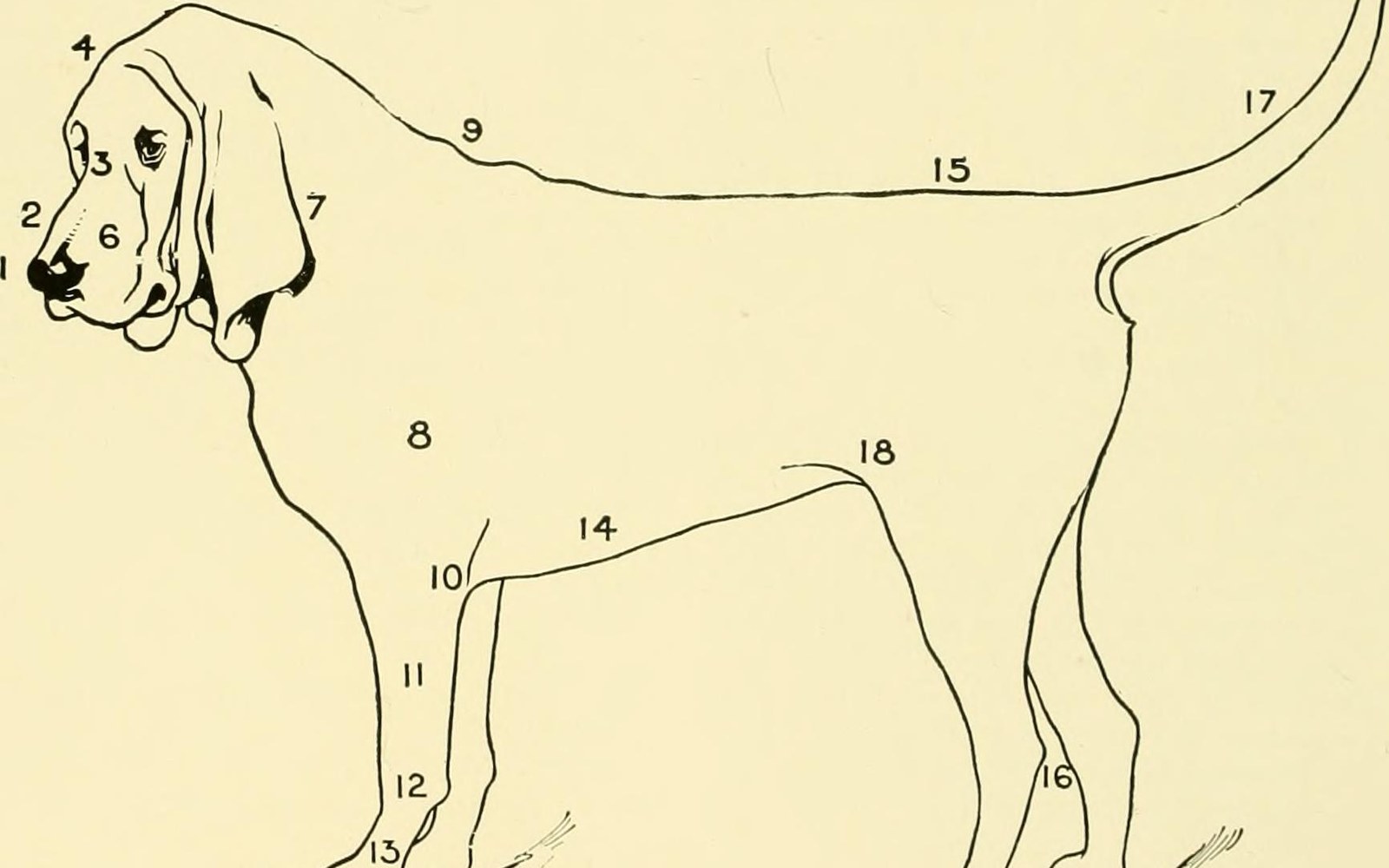
Ancestor columns, four generations deep.
Photo: The New Book of the Dog (1911) · Wikimedia CommonsThe most visible innovation was the star-rating system. Licences are issued for one or three years depending on a risk assessment, and premises are awarded between one and five stars based on compliance with the welfare standards set out in the statutory schedules. A one- or two-star rating attracts a one-year licence and a return inspection; three to five stars qualify for the three-year term. The scheme was modelled on local-authority food hygiene rating practice and was designed to give prospective buyers a published, standardised quality signal — though the ratings are held by individual local authorities and no single national database consolidates them.
Inspections under the Regulations must be unannounced at least once in every licence period, a departure from the largely pre-announced visits that characterised enforcement under the 1973 Act. The Regulations also extend to pet shops, home boarding and dog day care, bringing a range of ancillary trades under a unified licensing framework for the first time. Scotland, Wales and Northern Ireland operate under separate devolved instruments and are not covered by the 2018 Regulations.
England's licensing overhaul set a litter threshold, created a star-rating audit and replaced a framework that had barely changed since the 1970s
Chronology
- 1973Breeding of Dogs Act sets original licensing framework (threshold: five breeding bitches)
- 1999Breeding and Sale of Dogs (Welfare) Act amends but retains the bitch-number trigger
- 1 October 2018Animal Welfare (Licensing of Activities Involving Animals) Regulations 2018 come into force in England, replacing both earlier Acts