The Court Has Ruled
The Dutch Centimetre: How the Netherlands Set a Muzzle Floor in 2019
A 2019 Dutch government regulation introduced a measurable physical standard for brachycephalic dogs — the first national rule to define a minimum muzzle length in arithmetic terms.
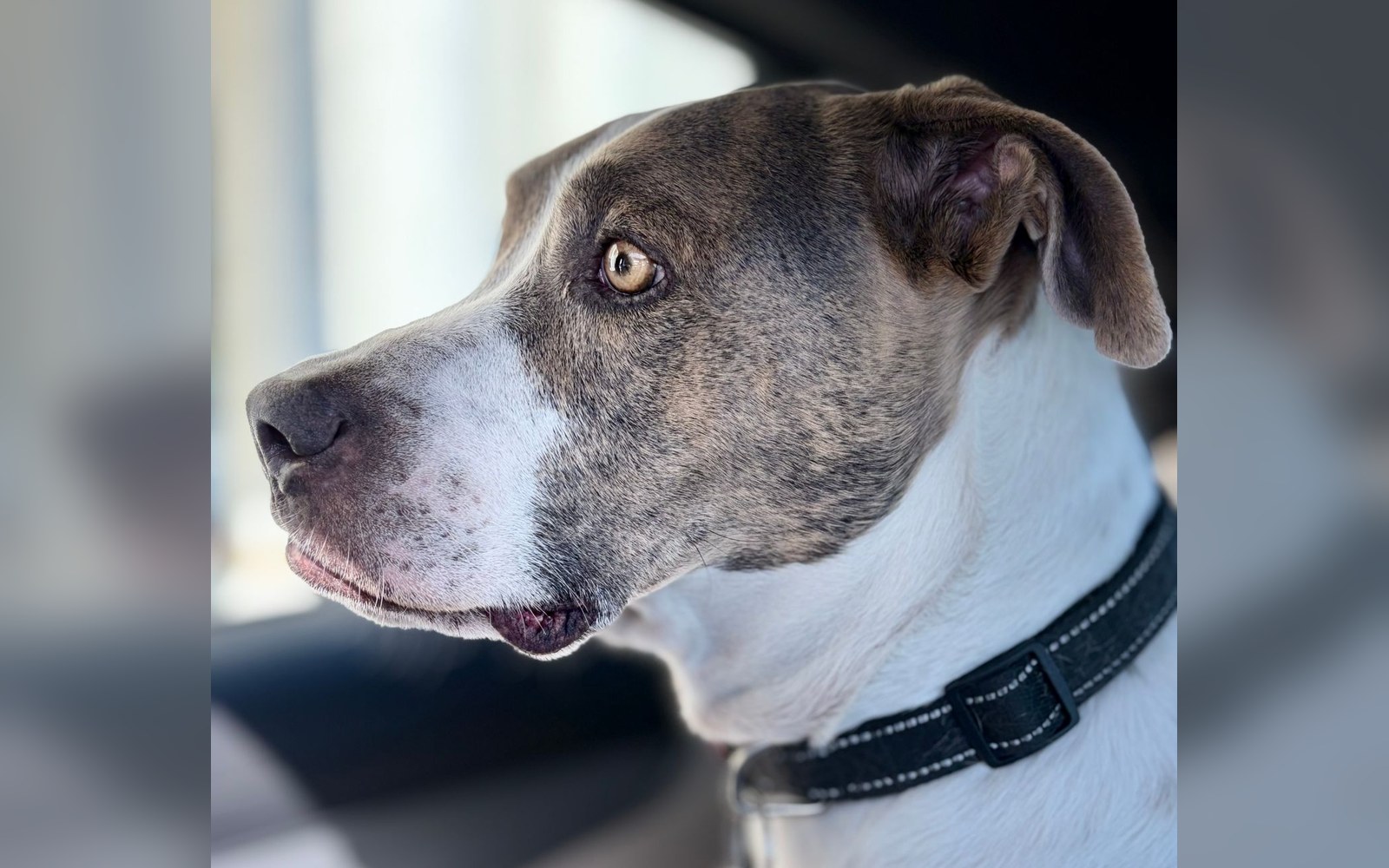
The specific Dutch regulatory instrument that prohibits breeding dogs below a minimum relative muzzle length, with its measurement definition and the breeds it named.
Photo: Luisa Ximena / PexelsThe Measurement That Became a Threshold
In 2019 the Dutch government issued a decree under the Animals Act (Wet dieren) establishing a minimum muzzle-to-skull ratio for breeds identified as suffering from brachycephalic obstructive airway syndrome, the set of upper-airway defects collectively described in veterinary literature as BOAS. The operative metric is a ratio: the muzzle length must equal at least one-third of the skull length, measured from the tip of the nose to the occipital protuberance. Dogs falling below this threshold are considered to meet the definition of Qualzucht — torture breeding — under Dutch law, and breeding from them is prohibited.
The regulation, formally part of the Besluit houders van dieren (Decree on Keepers of Animals), was published in the Staatsblad, the official Dutch legislative gazette, and entered into force progressively from the beginning of 2019. Enforcement authority rests with the Nederlandse Voedsel- en Warenautoriteit, the Netherlands Food and Consumer Product Safety Authority (NVWA), whose inspectors are empowered to measure animals presented for breeding or offered for sale.

The standard runs to a few hundred words, and every clause in it is amendable by committee.
Photo: RDNE Stock project / Pexels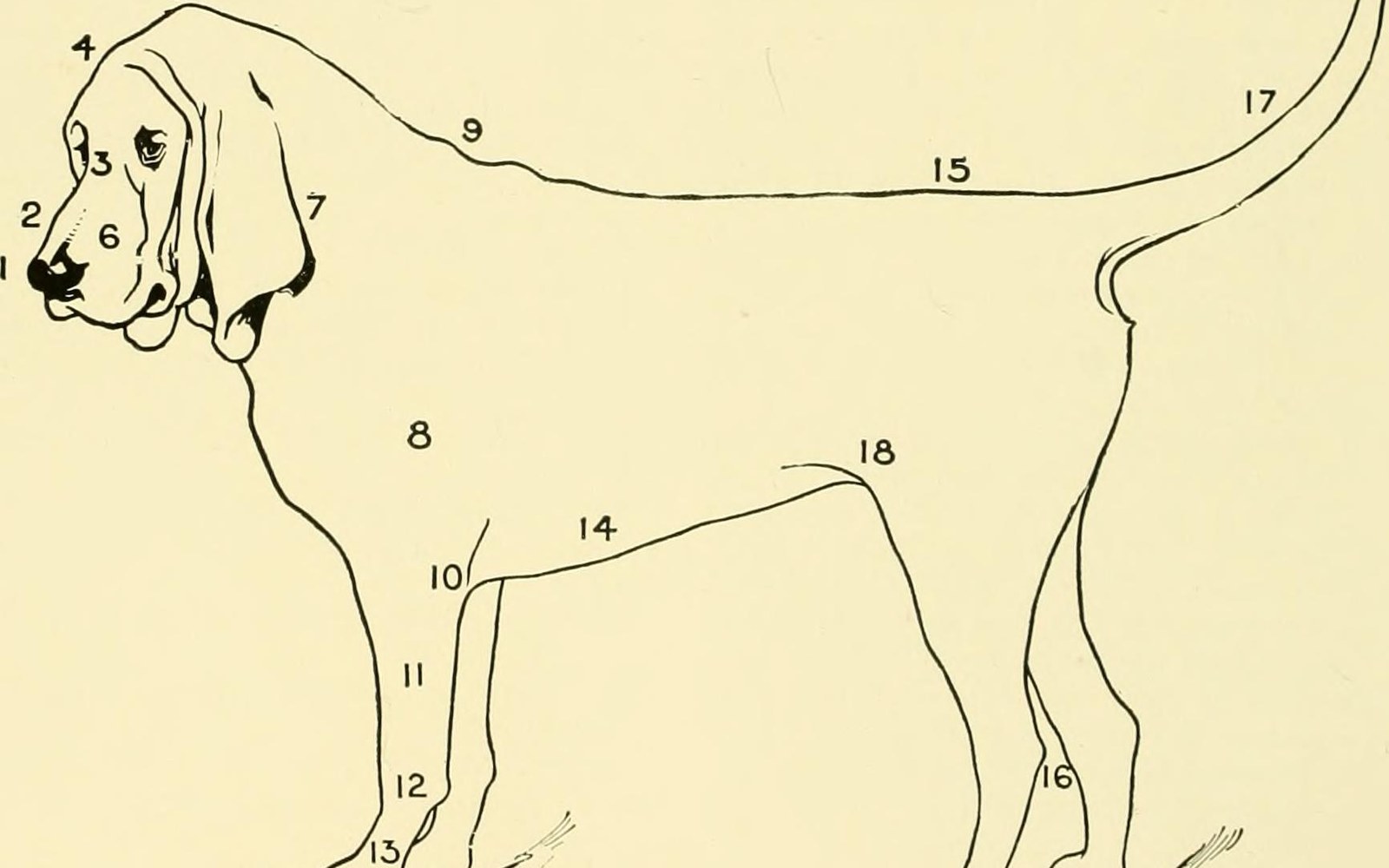
Ancestor columns, four generations deep.
Photo: The New Book of the Dog (1911) · Wikimedia CommonsThe breeds named in the accompanying ministerial guidance as falling within the scheme's primary scope include the English bulldog, the French bulldog, the pug and the Boston terrier — the four flat-faced breeds whose registration volumes across Europe had risen most steeply in the years preceding the measure. The French bulldog's registration trajectory through this period was among the most dramatic in any national registry; the Dutch measure was partly a direct legislative response to that commercial pressure.
Enforcement in Practice
Implementation has been contested. In the period immediately following the regulation's entry into force, Dutch breeders and breed clubs challenged the measure through the courts. The central argument was that the ratio test was arbitrary and that dogs could breathe adequately even below the one-third threshold. Dutch civil-procedure courts declined to suspend the regulation on an interim basis, allowing enforcement to continue while substantive challenges proceeded.
The NVWA approach on inspection has been to photograph the animal's head in a standardised lateral view and apply the ratio calculation from that image, a method that has itself been questioned on grounds of measurement reproducibility. No single published validation study of the photographic technique has been adopted as a binding standard, and the NVWA has acknowledged in public reporting that consistent calibration remains a practical challenge when different inspectors apply the rule across varied environments.
Key instrument
| Key instrument | What the record states |
|---|---|
| Rule | Besluit houders van dieren (Decree on Keepers of Animals), Netherlands, 2019 |
| Metric | muzzle length must equal or exceed one-third of total skull length |
| Measurement point | tip of nose to occipital protuberance |
| Enforcer | NVWA (Nederlandse Voedsel- en Warenautoriteit) |
The practical effect on registrations in the Netherlands has been measurable. The Dutch Kennel Club, the Raad van Beheer, reported declining registration numbers for English bulldogs and pugs in the years following the decree. How much of that decline reflects breeders moving animals to neighbouring jurisdictions for mating, and how much reflects genuine reduction in breeding stock below the threshold, remains disputed in the literature. There is documented evidence of animals being transported to Belgium and Germany for breeding purposes — a form of regulatory arbitrage that the Netherlands government has acknowledged but not yet legislated to close.
The Dutch measure sits within a wider European pattern. Norway's Oslo District Court upheld a comparable prohibition in 2022, and the Borgarting Court of Appeal confirmed in 2023 that breeding English bulldogs and cavalier King Charles spaniels in their current form violated Norwegian animal welfare law. Germany's Tierschutzgesetz §11b has long addressed Qualzucht conceptually, though without a numerical muzzle test equivalent to the Dutch one. The Netherlands' contribution to this body of regulation is the specificity: a single, auditable number expressed as a ratio that an inspector can, in principle, derive from a photograph.
Whether the one-third ratio is the right threshold — rather than one-quarter or one-half — is a question the regulation itself does not resolve with cited clinical evidence. Researchers including Rowena Packer at the Royal Veterinary College have published on airway obstruction and skull morphology, but the Dutch legal threshold was not derived from a single named study. It represents a regulatory judgment, arithmetically stated, that the bodies arguing for dogs' welfare regard as a minimum floor, and that breed clubs regard as a blunt instrument applied to a complex biological variable.
Chronology
- 2019Decree enters force; one-third muzzle ratio becomes enforceable standard
- 2019–20Dutch breeders and breed clubs mount court challenges; interim suspension refused
- 2022Oslo District Court upholds equivalent prohibition
- 2023Borgarting Court of Appeal confirms Norwegian ban on English bulldog and cavalier breeding