The Court Has Ruled
Lucy's Law and Its Scottish and Welsh Counterparts
Lucy's Law in England and its Scottish and Welsh equivalents: how each bans third-party sales of puppies and kittens by licensed sellers.

The 2020 England prohibition on third-party puppy and kitten sales, the Scottish and Welsh equivalents, and what the legislation changed for licensed pet shops and dealers.
Photo: Suzy Hazelwood / PexelsThe English Prohibition and the Statutory Mechanism
England moved first. The Animal Welfare (Licensing of Activities Involving Animals) (England) (Amendment) Regulations 2019 came into force on 6 April 2020, amending the 2018 licensing framework that had already tightened the conditions under which pet sellers and dog breeders could operate. The 2019 Amendment inserted a direct prohibition: no licensed pet shop or other commercial dealer could sell a puppy or kitten under six months of age unless it had bred the animal itself. The popular name, Lucy's Law, derives from Lucy, a Cavalier King Charles spaniel documented by campaign group Pup Aid as a victim of puppy-farm conditions; the statutory instrument carries no such name in its operative text.
The mechanism was straightforward. Because the sale of pet animals in England required a licence from a local authority under the 2018 Regulations, prohibiting the activity within the licensing conditions effectively closed the commercial route for any seller who had not themselves produced the litter. Unlicensed dealers — operating outside the system entirely — remained subject to existing animal welfare enforcement rather than the new amendment. Pet shops, the primary legislative target, ceased overnight to be a legal venue for third-party puppy sales, meaning transactions in which a dealer places a puppy bred elsewhere. Breeders selling their own litters directly were unaffected by the 2020 provision, as direct sales do not require a pet-selling licence under the Regulations.
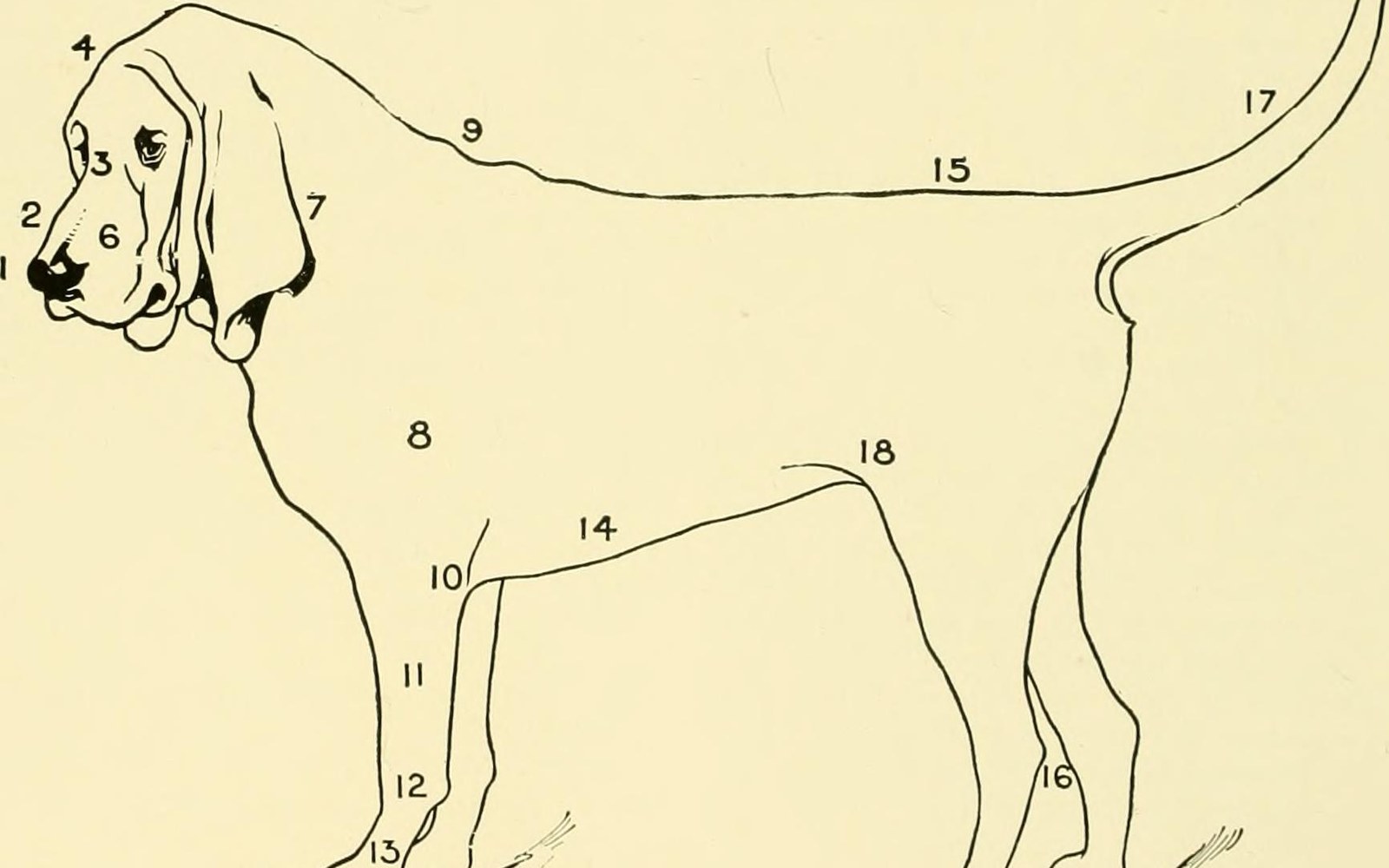
Ancestor columns, four generations deep.
Photo: The New Book of the Dog (1911) · Wikimedia Commons
The standard runs to a few hundred words, and every clause in it is amendable by committee.
Photo: RDNE Stock project / PexelsScotland, Wales and the Shape of Devolved Equivalents
Scotland legislated through a different statutory vehicle. The Licensing of Animal Dealers (Young Cats and Young Dogs) (Scotland) Regulations 2009 had already required dealers to be licensed, but the prohibition on third-party sales arrived via the Animals and Wildlife (Penalties, Protections and Powers) (Scotland) Act 2020, which received Royal Assent on 21 July 2020. Secondary regulations made under that Act — the Keeping and Selling Dogs and Cats (Scotland) Regulations 2021 — came into force on 2 September 2021, creating the full operational ban in Scotland. The Scottish instrument applies to any person selling a cat or dog under six months in the course of a business, and requires that the seller also be the breeder. Scotland's approach incorporates cats more explicitly in its primary statute structure than the English amendment does, though the practical effect on puppies and kittens is comparable.
Wales enacted its prohibition through the Animal Welfare (Licensing of Activities Involving Animals) (Wales) Regulations 2021, which came into force on 10 September 2021. Welsh regulations are published by the Senedd and the 2021 instrument similarly prohibits a person from selling a dog or cat under six months unless that person is the breeder. Wales's operative date therefore came roughly seventeen months after England's.
What the Three Instruments Changed and Where Gaps Remain
In aggregate, the three prohibitions ended the legal operation of the pet-shop puppy trade as it had been conducted in Great Britain for more than a century. The Dogs Trust, which publishes annual data on the puppy market, noted in subsequent reports that the volume of pet-shop puppy advertising declined sharply following the English and Welsh commencement dates, though the charity also documented a compensating rise in unregulated private sales and online listings presenting dealers as private individuals — a circumvention pattern that the legislation's drafting did not close.
Chronology
- 6 April 2020England: Animal Welfare (Licensing of Activities Involving Animals) (England) (Amendment) Regulations 2019 enters into force
- 10 September 2021Wales: Animal Welfare (Licensing of Activities Involving Animals) (Wales) Regulations 2021 enters into force
- 10 September 2021Wales: Animal Welfare (Licensing of Activities Involving Animals) (Wales) Regulations 2021 enters into force
- 10 September 2021Wales: Animal Welfare (Licensing of Activities Involving Animals) (Wales) Regulations 2021 enters into force
- Northern Irelandno directly equivalent prohibition enacted as of most recent parliamentary record
The Competition and Markets Authority's 2024 veterinary market investigation did not examine Lucy's Law directly, but its findings on the opacity of the pet-acquisition market are relevant context: information asymmetries between buyers and sellers that characterise veterinary services apply equally to the market for puppies prior to first sale. Neither England, Scotland nor Wales has yet legislated to require proof of breeding at point of private sale, leaving enforcement dependent on local authority inspection of licensed premises and, for unlicensed dealers, on the Animal Welfare Act 2006 and its devolved equivalents rather than the specific third-party sale prohibition.
Northern Ireland, which has its own legislative competence for animal welfare, had not enacted a directly equivalent prohibition as of the most recently available parliamentary record.
Statutory definitions compared
| Statutory definitions compared | What the record states |
|---|---|
| England | prohibition embedded in pet-selling licence conditions under the 2018 Regulations; targets licensed dealers |
| Wales | standalone statutory instrument; applies to any person selling a dog or cat under six months in the course of a business who is not also the breeder |
| Scotland | primary Act plus 2021 secondary regulations; explicitly names cats and dogs under six months; applies to business sellers who did not breed the animal |