The Court Has Ruled
What the Borgarting Court Actually Decided
The 2023 Norwegian appeal ruling that upheld a ban on English bulldog and cavalier King Charles spaniel breeding remains the most precisely reasoned judicial statement on conformation-linked suffering yet produced by any European court.

A close reading of the 2023 Norwegian appeal-court ruling that found English bulldog and cavalier King Charles spaniel breeding in breach of the Animal Welfare Act — the parties, the grounds and the earlier 2022 district judgment it confirmed.
Photo: Antonio Friedemann / PexelsThe Parties and the Procedural Path
The case reaching the Borgarting Court of Appeal in 2023 had its origins in a 2022 judgment from the Oslo District Court. The original claimant was the Norwegian Society for the Protection of Animals (NSPA; in Norwegian, Dyrebeskyttelsen Norge), acting on behalf of animal welfare interests rather than any individual dog. The respondents were the Norwegian Kennel Club (Norsk Kennelklubb) and two named breeders — the only parties whose standing as registered breeders of the relevant breeds gave them locus in the proceedings. The Norwegian state, through the relevant ministry, was not a co-defendant, though the Animal Welfare Act under which the claim was brought is state law.
The Oslo District Court found in favour of the NSPA in its January 2022 judgment, ruling that breeding both the English bulldog and the cavalier King Charles spaniel, as the breeds currently existed, violated Section 25 of the Norwegian Animal Welfare Act of 2009. Section 25 prohibits breeding that predictably transmits heritable defects causing suffering — a statutory construction closely analogous to the German concept of Qualzucht (torture breeding), though Norwegian law uses different terminology. The Kennel Club and the named breeders appealed; the Borgarting Court of Appeal heard the matter and delivered its judgment in October 2023, dismissing the appeal and confirming the district court's central findings.
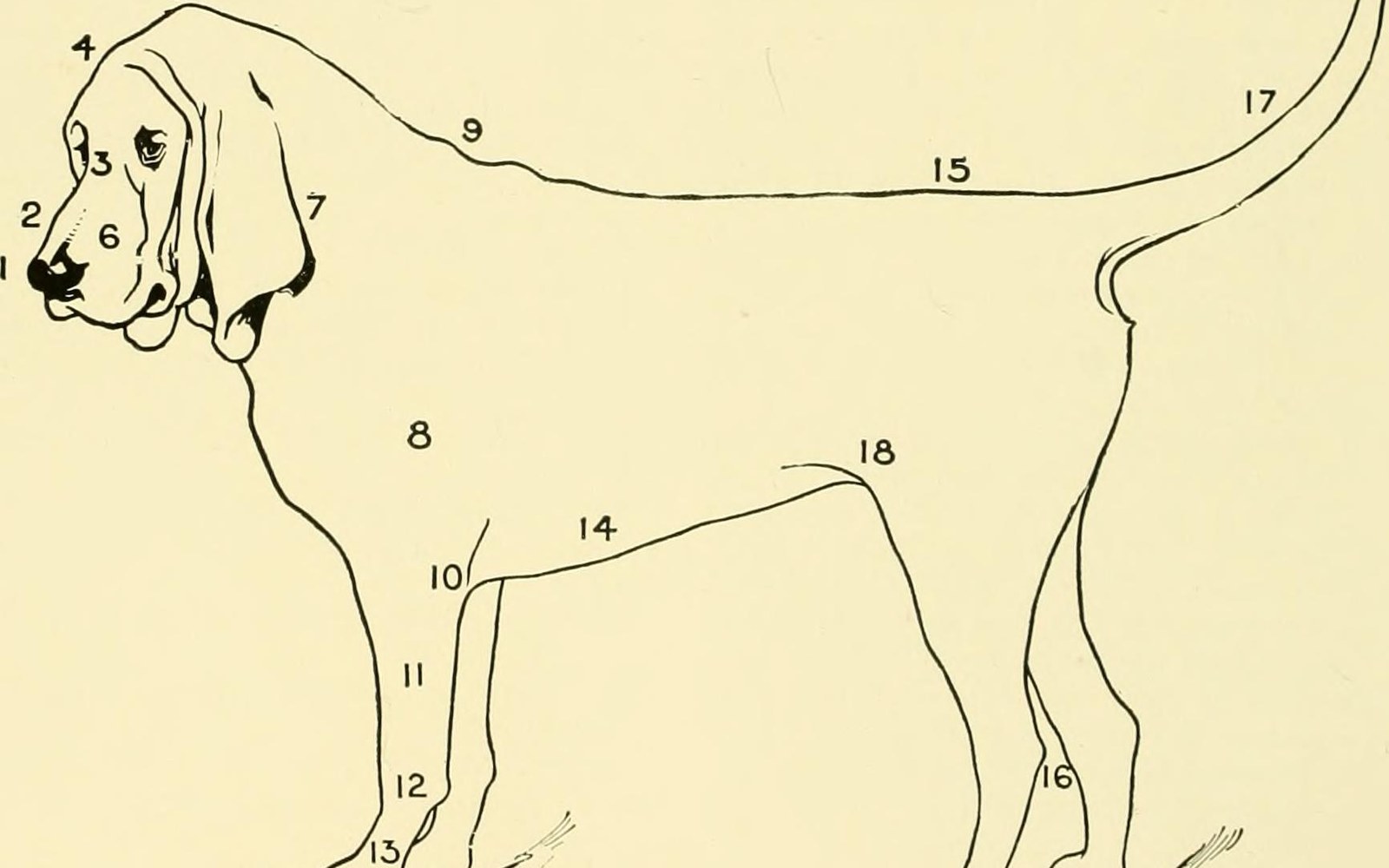
Ancestor columns, four generations deep.
Photo: The New Book of the Dog (1911) · Wikimedia Commons
The standard runs to a few hundred words, and every clause in it is amendable by committee.
Photo: RDNE Stock project / PexelsChronology
- January 2022Oslo District Court rules that English bulldog and cavalier King Charles spaniel breeding breaches Section 25 of the Norwegian Animal Welfare Act 2009
- October 2023Borgarting Court of Appeal dismisses the Kennel Club and breeders' appeal; district court findings confirmed
- The judgment does not issue a permanent species-level prohibition; it rules against breeding as then constituted
What the Judgment Turned On
The appeal court's reasoning proceeded in two distinct analytical tracks — one for each breed — because the heritable conditions at issue are physiologically unrelated, even if the legal principle applied to both is the same.
For the English bulldog, the court accepted a body of veterinary evidence establishing that the breed's characteristic morphology — an extremely shortened skull, widely splayed forelimbs, a compressed thorax and a screw tail — predictably causes brachycephalic obstructive airway syndrome (BOAS), spinal malformations and dermatological disease in a substantial proportion of dogs. The Respiratory Function Grading Scheme developed jointly by the University of Cambridge and the Kennel Club was among the clinical frameworks referenced in the supporting evidence, though the Norwegian court applied its own statutory standard rather than adopting any particular grading protocol as a legal threshold. Crucially, the court found that the English bulldog's morphology is so far removed from a functionally sound baseline that no individual selection within the breed, under current breed-standard constraints, could reliably produce offspring free of significant anatomical compromise. It was this systemic character — not the suffering of any specific dog — that engaged Section 25.
For the cavalier King Charles spaniel, the operative conditions were Chiari-like malformation and the syringomyelia it produces: fluid-filled cavities forming within the spinal cord as a direct consequence of the breed's undersized posterior cranium. The court heard evidence on the prevalence of these conditions in the breed population and on the degree of pain and neurological impairment they cause. Research published by Clare Rusbridge and others on syringomyelia progression, and the MRI-based grading work associated with Jane Ladlow at the University of Cambridge, formed part of the evidentiary record on which the expert witnesses drew. Again, the court's finding was structural: the trait responsible for the cavalier's facial conformation simultaneously predisposes the breed at population level to malformation of the foramen magnum, and no screening programme then in place had demonstrably reduced prevalence to a degree that would take breeding outside the scope of Section 25.
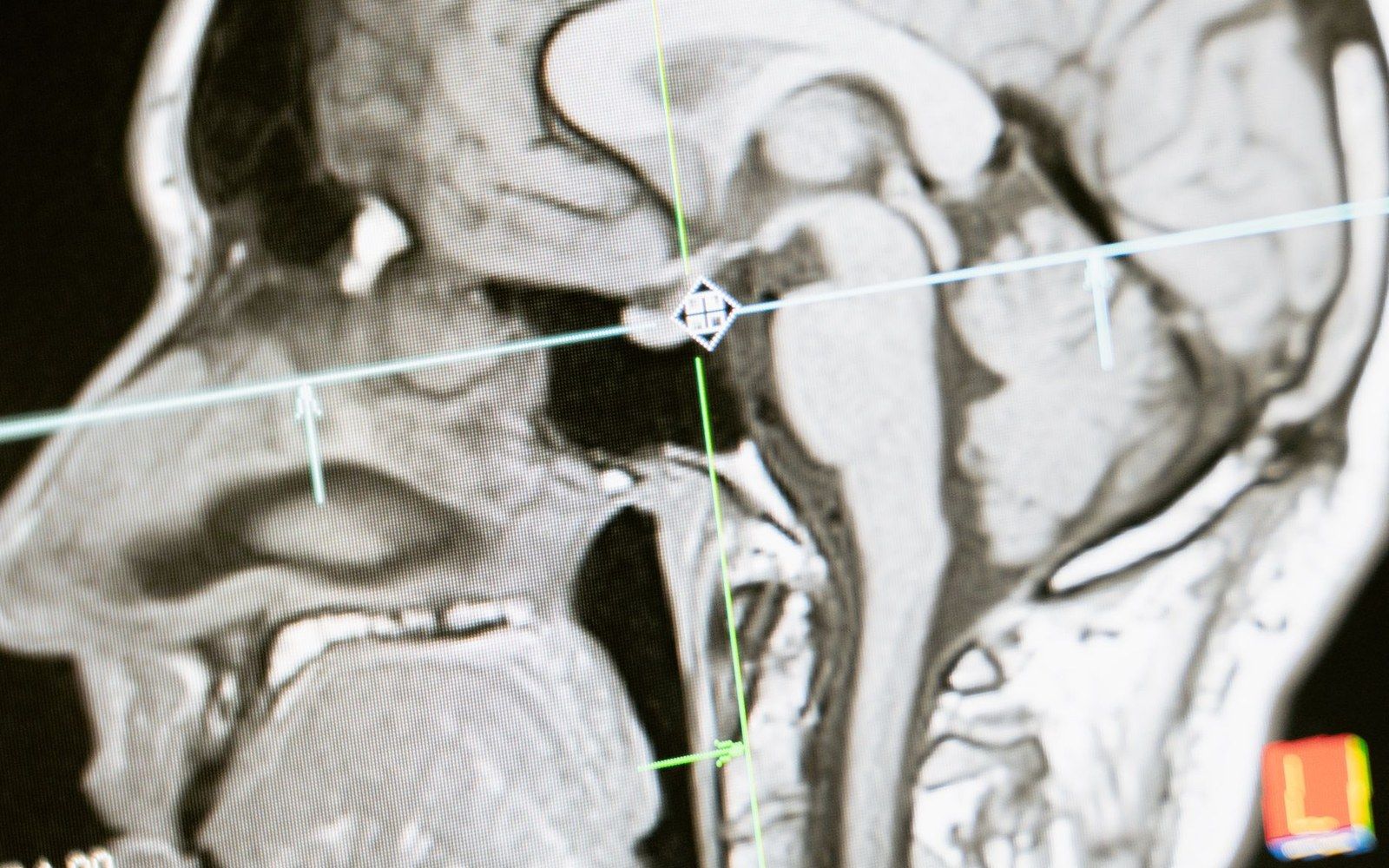
Screening images are read against a defined grade scale, and the grade travels with that dog’s own record rather than with its breed.
Photo: MART PRODUCTION / PexelsThe appeal court explicitly rejected the Kennel Club's argument that ongoing health programmes — MRI screening schemes, respiratory assessment, and selective breeding guidance — were sufficient to bring practice into legal compliance. The judgment held that the existence of a screening protocol does not suspend the statutory prohibition if breeding continues to produce, in statistically foreseeable numbers, dogs that suffer heritable conditions. Intent was not the test; outcome probability was.
The Remedy and Its Limits
The Borgarting judgment did not order a total ban on the breeds' existence in Norway, and it issued no injunction against owning, importing or keeping the dogs already present in the country. What it confirmed was that active breeding of English bulldogs and cavalier King Charles spaniels, as then constituted, was unlawful under Section 25. The practical effect fell on registered Norwegian breeders and on the Kennel Club as the body whose standards and registration system structured that breeding activity.
The judgment left open, at least in principle, the possibility that sufficiently reformed breeding — operating outside current morphological parameters, and demonstrably reducing the prevalence of the relevant conditions — might satisfy the statute. The court did not define what such reform would require in metric terms, leaving that question to legislative or regulatory follow-up rather than judicial specification. This restraint was legally orthodox but practically significant: it means the judgment functions as a prohibition on the status quo rather than a permanent ban irrespective of future breed change.
The 2023 Norwegian appeal ruling that upheld a ban on English bulldog and cavalier King Charles spaniel breeding remains the most precisely reasoned judicial statement on conformation-linked suffering yet produced by any European court
No equivalent case has yet produced a binding judgment in England, though the legal and scientific raw material assembled in the Norwegian proceedings draws heavily on research conducted at the Royal Veterinary College and at Cambridge, and the evidentiary record would be recognisable to any English or Welsh court asked to consider comparable claims. The Fédération Cynologique Internationale, as the international body to which the Norwegian Kennel Club is affiliated, has noted the judgment but has not amended its breed standards in direct response.
The two breeds, the two grounds
| The two breeds, the two grounds | What the record states |
|---|---|
| English bulldog | BOAS, spinal malformation, dermatological disease; morphology found systemically incompatible with functional soundness under current breed standards |
| Cavalier King Charles spaniel | Chiari-like malformation and syringomyelia; undersized posterior cranium identified as the heritable structural cause; screening programmes found insufficient to displace statutory liability |
The Judgment as Precedent
The Borgarting ruling is significant less for its immediate jurisdictional reach — it binds Norwegian courts and Norwegian parties — than for demonstrating that a high-level appellate court, working from peer-reviewed veterinary evidence and applying a general animal-welfare statute, can reach a finding of unlawfulness against the continuation of an established pedigree breed in its present form. The Norwegian Society for the Protection of Animals' published account of the litigation and the full appeal-court judgment text are the primary sources; secondary reporting has in some instances overstated the ruling's scope or understated the precision of its reasoning. The court did not find that the breeds should cease to exist; it found that breeding them as they currently exist causes suffering that Norwegian law does not permit.