The Court Has Ruled
§11b and the Concept of Qualzucht
Rasowy covers the pedigree dog breeds as they are registered, regulated and measured.
Germany's Tierschutzgesetz §11b, which prohibits breeding animals whose offspring predictably suffer — the statutory definition of Qualzucht (torture breeding), how it has been applied to specific morphologies and the prosecutions or rulings it has generated.
Photo: Markus Spiske / PexelsA Statute With Teeth — and a Contested Edge
Germany's Animal Protection Act — the Tierschutzgesetz — has carried a prohibition on so-called Qualzucht since 1986. The term, which translates literally as "torture breeding," describes the deliberate production of animals whose heritable characteristics predictably cause pain, suffering, damage or lasting behavioural disturbance. The operative provision is §11b, which forbids breeding vertebrates where the offspring or their descendants can be expected to suffer from body-part malformations, dysfunctions or behavioural disorders. The prohibition is not breed-specific on its face; it targets the morphological or physiological outcome, whatever the pedigree attached to it.
The 1998 amendment to the Tierschutzgesetz sharpened §11b further by introducing a list of affected characteristic categories: exaggerated skin folds, shortened skulls, permanently open eyelids, missing or malformed limbs, and heritable predispositions to conditions including epilepsy and heart failure. A companion regulation, the Tierschutz-Hundeverordnung of 2001, set minimum welfare standards for dog-keeping and reiterated that breeding practices contravening §11b are unlawful, giving enforcement authorities an additional administrative route alongside criminal prosecution.

The standard runs to a few hundred words, and every clause in it is amendable by committee.
Photo: RDNE Stock project / Pexels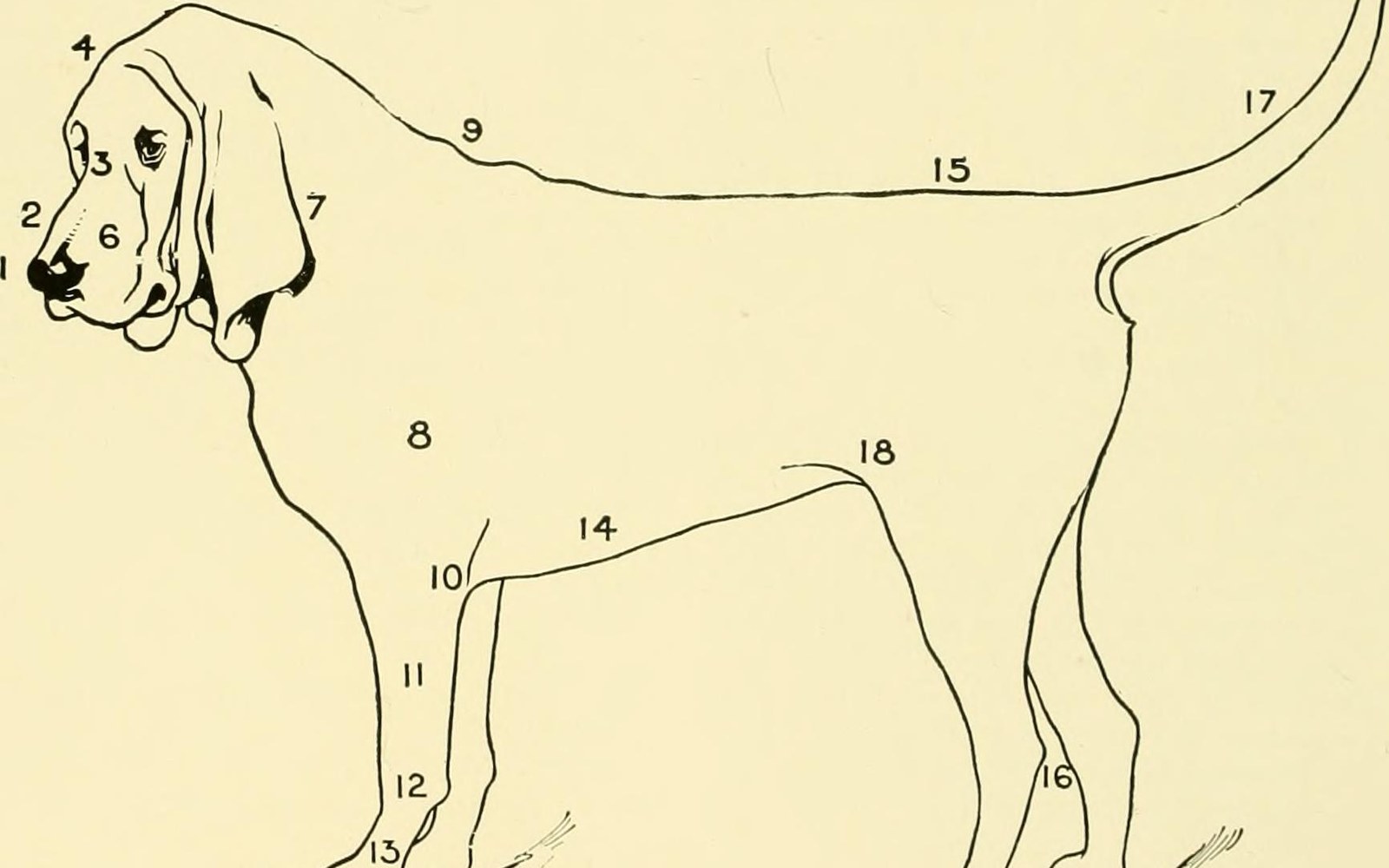
Ancestor columns, four generations deep.
Photo: The New Book of the Dog (1911) · Wikimedia CommonsThe statute's prohibited categories (from the 1998 §11b text)
| The statute's prohibited categories (from the 1998 §11b text) | What the record states |
|---|---|
| Exaggerated skull shortening | linked to BOAS and dentition disorders |
| Persistent skin folds | associated with dermatitis and entropion |
| Missing or malformed limbs | achondroplastic dwarfism in some lines |
| Heritable epilepsy or heart failure | condition-based rather than morphology-based |
| Permanently open eyelids | exposure keratitis risk |
| Double-merle matings (state enforcement practice, not statutory text) | high probability of congenital blindness and deafness in offspring |
What the Statute Has Actually Reached
German prosecutors and administrative courts have applied §11b most frequently to brachycephalic breeds — those with foreshortened muzzles whose skulls produce anatomical defects consistent with Brachycephalic Obstructive Airway Syndrome (BOAS). The affected structures include narrowed nostrils, an elongated soft palate, hypoplastic trachea and everted laryngeal saccules, all of which restrict airflow and are demonstrably heritable. Dogs with these traits exhibit chronic respiratory compromise; the severity varies but is, in the worst-affected individuals, lifelong.
Administrative proceedings in Germany have resulted in prohibition orders against specific breeders and, in some cases, the seizure of breeding stock. The evidentiary difficulty courts and authorities face is establishing a causal link between a named individual's breeding programme and a predictable pattern of suffering in offspring — the statute's threshold is probability, not certainty, but the standard must be met animal by animal or litter by litter rather than breed by breed. This procedural requirement has made blanket enforcement against an entire breed type legally and practically difficult, even where veterinary consensus on the morphology's consequences is clear.
Excessively folded skin — particularly in Shar Peis and some bulldog lines — has also generated German enforcement actions, on the basis that the folds cause recurrent dermatitis and entropion. Merle-to-merle matings, which statistically produce a high proportion of double-merle offspring suffering blindness and deafness, have been treated as Qualzucht by several German state (Land) veterinary authorities, who have both prosecuted breeders and refused registration applications on welfare grounds.
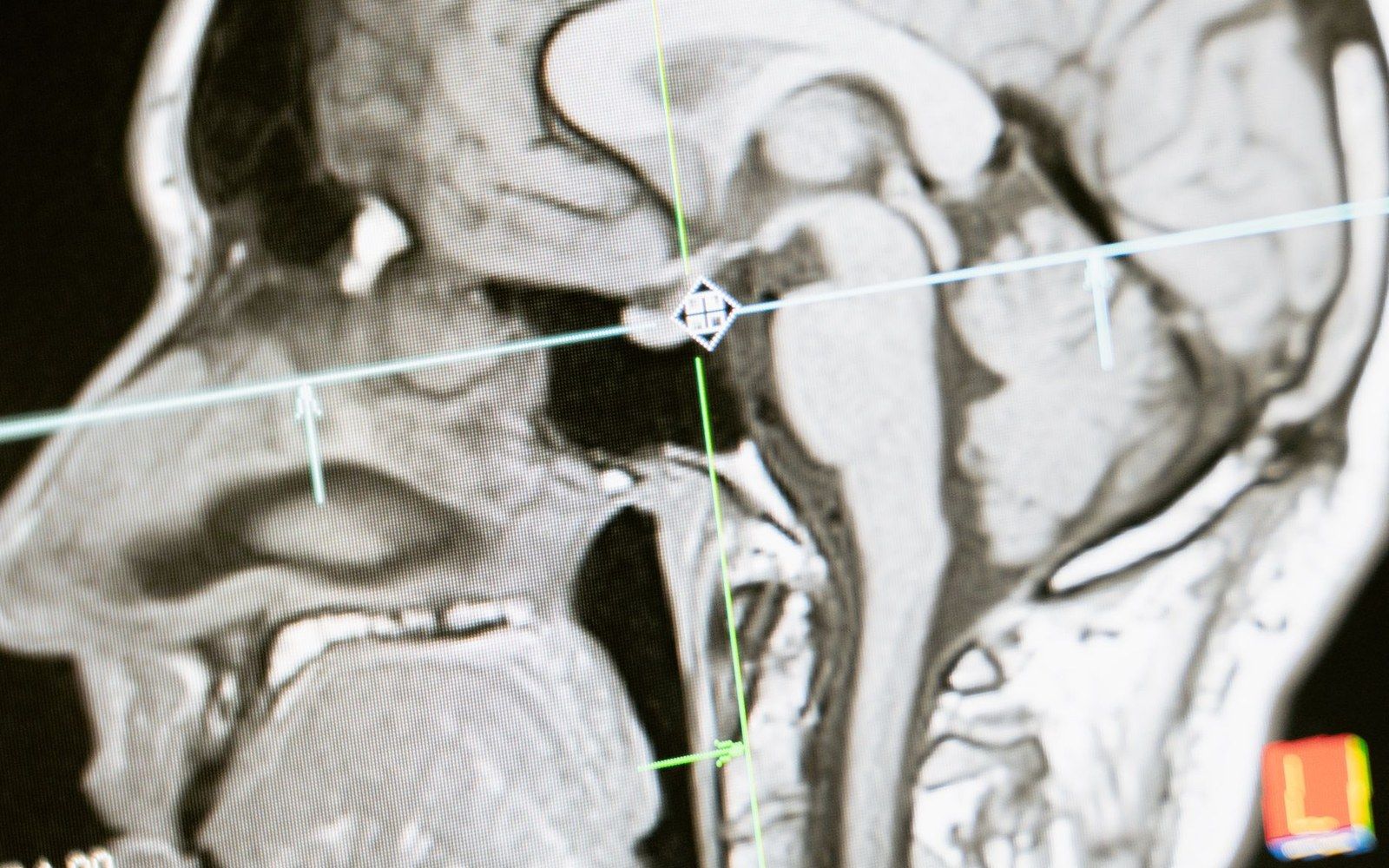
Screening images are read against a defined grade scale, and the grade travels with that dog’s own record rather than with its breed.
Photo: MART PRODUCTION / PexelsGermany's §11b sits inside a broader European regulatory movement. The Netherlands introduced a minimum muzzle-length rule in 2019, expressed as a relative skull-length ratio. Norway's courts addressed equivalent questions in constitutional and animal-welfare terms when, in 2023, the Borgarting Court of Appeal found that breeding English bulldogs and Cavalier King Charles spaniels in their current conformation constituted a breach of Norwegian animal-welfare law. Germany's instrument is older and differently structured — statutory prohibition enforced through criminal and administrative law rather than civil litigation — but the underlying question is the same: whether the predictable suffering of offspring from a heritable morphology can be legally tolerated when the purpose is aesthetic or reputational.
The practical impact of §11b remains contested within Germany. Enforcement is a Land competence, so application is uneven across the sixteen federal states. Breed clubs affiliated with the Fédération Cynologique Internationale have argued that their own health-testing requirements and revised breed standards satisfy the welfare obligation without a statutory ban. Critics, including veterinary welfare researchers whose published work has documented BOAS prevalence and severity, maintain that voluntary schemes leave the structural cause — selection for extreme skull conformation — unaddressed. The statute exists; how hard it is pressed depends on which Land, which year and which prosecutor or administrative officer is involved.
Rasowy covers the pedigree dog breeds as they are registered, regulated and measured
Chronology
- 1986§11b first enacted in the Tierschutzgesetz
- 1998Amendment adds enumerated prohibited characteristic categories
- 2001Tierschutz-Hundeverordnung reinforces and operationalises §11b for dogs
- 2019Netherlands introduces muzzle-length ratio rule, citing comparable welfare rationale
- 2023Norway's Borgarting Court of Appeal rules on English bulldog and Cavalier breeding